


Teaching your child to read is one of the greatest gifts you can give them. Whether your child is showing pre-reading signs or you are simply looking for resources to help you when that time comes, we’ve put together everything you’ll need to get started. Enjoy!
SCHOOL
Teach Your Child to Read in 6 Easy Steps
August 4, 2025
The following content may contain affiliate links. If you purchase something from the links, we may receive a commission.

Teaching your child how to read is one of the most rewarding journeys you can take as a parent. From connecting letters to sounds, to sounding out their first words, there is something magical about the learning process. While it may seem intimidating at first, there are many options that can help make the transition as easy as possible for both you and your child. Shared from fellow homeschool moms and teacher friends, below we will provide you with the best resources to teach your child to read.
We have broken down how to teach your child to read into manageable steps that can be worked concurrently but should be introduced in order.
One final thing to note before you begin, the key to developing a love of reading is to not rush the process. Reading is a lifelong journey so enjoy and celebrate each step along the way.
What age should you teach your child to read?
There is no one-size-fits all answer, but most children are beginning to develop early reading skills around 3 – 5 years old. This means that they are showing interest in letters and sounds and possibly even sounding out or sight-reading basic words.
Some children may show an interest at an even earlier age, while others may not be ready until kindergarten or even first grade and that’s ok. What matters most is building a strong foundation.
If your child is on the younger side and you would like to start building pre-reading skills, the best thing you can do is read aloud every day. Reading together will naturally introduce your child to letters, sounds, and words, while building their already growing vocabulary!
Teach Your Child to Read - Step by Step
Step 1 – Letter Recognition
The first step in teaching your child to read is letter recognition, which is simply being able to identify the letters of the alphabet. This process should be fun, hands-on, and engaging.
While you can (and should) check out alphabet books from your library, it is also important to a have a few on hand at home. Make sure when you are introducing each letter to your child, they see examples of both uppercase and lowercase letters.
Here are the best resources to teach your child to read and understand letter recognition.
A is for Apple is an interactive alphabet book. On each page, a letter is given with an indented outline of the letter that the reader can trace with their fingers. There is also a lift-the-flap with an additional picture and word that starts with that letter.
Alphablock by Christopher Franceschelli
Alphablock is another book we love for letter recognition for its hands-on functionality and colorful illustrations. Like other alphabet books, it follows the series of A is for… but in this book, you have to flip the letter over to see the example.
Chicka Chicka Boom Boom by Bill Martin Jr. and John Archambault
Chicka Chicka Boom Boom has been a top-selling alphabet board book since it came out in 2012. Its colorful pages and lively rhymes will be ones you’ll read again and again. It was a longtime favorite in our household and with over 160,000 ratings on Goodreads, it looks like we’re not alone!


Along with books, alphabet games, puzzles, and songs are a fun and hands-on way to add both play and letter recognition into your child’s regular routine. The more enjoyable you make it, the more engaging it will be for your child.
Alphabet Matching Memory Game – While many puzzles and activities only focus on uppercase letters, this memory game allows children to practice matching upper- and lower-case letters.
LeapFrog 2-in-1 LeapTop Touch – This is an engaging interactive toy for learning letters and numbers.


Step 2 – Phonemic Awareness
The next step in teaching your child to read is phonemic awareness, which involves being able to hear and manipulate sounds. This step will likely be worked in conjunction with letter recognition. Although we typically think of reading as understanding words that are written down, there is much more to it than that.
Phonemic awareness forms the foundation for understanding how spoken language is connected to written language. Practicing phonemic awareness helps children understand that words are made up of sounds which will be useful in practicing “sounding out” words when reading and spelling words when writing.
Since phonemic awareness is based on sounds in spoken words, and not letters, these activities and resources are all about listening and manipulating what is heard.
Here are the best resources to teach your child to read and understand phonemic awareness.
Reading books, playing rhyming games, and listening to songs is one of the best ways to practice phonemic awareness. This is a good place to add that we are HUGE proponents for reading aloud to your child. Along with phonemic awareness, reading aloud can improve other aspects of language development like vocabulary growth and improved grammar. But more importantly, it provides a wonderful opportunity to bond together over reading.
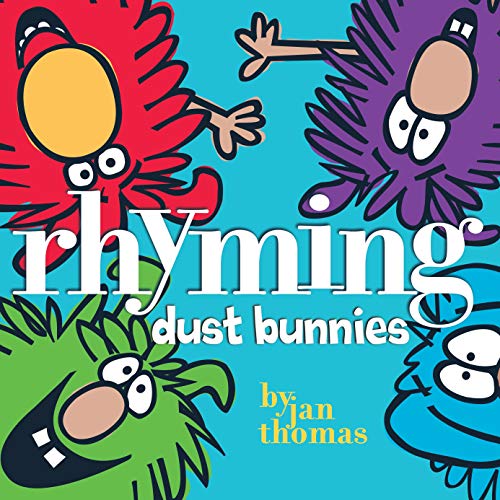
Rhyming Dust Bunnies by Jan Thomas
Rhyming Dust Bunnies is a colorful picture book that features three dust bunnies, Ed, Ned, and Ted, who love to rhyme. Unfortunately, their friend Bob just can’t get his rhyming together. With a playful story line and a humorous twist at the end, this book is wonderful for teaching rhyming and listening skills.
When looking for rhyming books, Dr. Seuss provides plenty of them. We picked Hop on Pop as an example because it is one of the simplest to read and understand, ideal for younger children who are at the very start of their reading journey.


Other ideas you can do to help with phonemic awareness include sound matching, sound isolation, segmenting and blending games, clap it out, and “I Spy” with Sounds. The benefit of these activities is that they can be done anytime and anywhere. They’re perfect for car rides, bath time, or making dinner. Keep it light and playful and your child will naturally build strong pre-reading skills.
Sound Matching – Which word does not belong game? Say 3 words, two that start with the same sound and one that does not belong. Have your child tell you which word doesn’t fit.
Sound Isolation – Say a simple word like, dog. Then, have your child identify the sound parts of the word. It’s usually easiest to ask for the beginning sound and/or the ending sound.
Segmenting and Blending Games – Going back to the word dog. Break down the sounds of the word d-o-g and see if your child can blend them together. To add another level to the game, change the first or last sound like b-o-g or d-o-t.
Clap it Out – When practicing listening to syllables, make it a clapping game by clapping out each syllable. The names of fruit are a great way to practice this, like “ap-ple” or “ba-na-na.”
“I Spy” with Sounds – Rather than saying “I Spy” something “insert color,” this game is played by stating “I spy something that starts with the /b/ sound.” The answer could be ball or bike.
Step 3 – Letter Sound Correspondence (Phonics)
While similar, it’s important to note that phonemic awareness is not the same as phonetic instruction. Phonics is the next big step after phonemic awareness. Whereas phonemic awareness is an understanding of hearing sounds and manipulating them, phonetic learning involves connecting sounds to letters. This step can be performed with step 2, but it is essential that your child is able to identify the letters of the alphabet first before diving into phonics-based learning.
Here are the best resources to teach your child to read and understand letter-sound correspondence.
LeapFrog Fridge Phonics Magnetic Letter Set
We love Jack Hartmann’s videos for kids, but especially this one for letter sounds because it also incorporates the ASL alphabet!
See It, Say It, Sign It | Letter Sounds | Jack Hartmann (6:28)
Here are a few other helpful phonics related videos because it’s good to have a few to rotate through.
Alphabet Phonics Song | Hopscotch (2:41)
ABC Phonics Chant for Children | Sounds and Actions from A to Z | Tora the Teacher (4:22)
ABC Phonics Song with Sounds for Children | Rock ‘N Learn (4:54)

Step 4 – Blending Sounds to Read Words (Phonics)
You’ve worked hard to get to this point, and this is where reading really starts to take shape. Once letter sounds are understood, it’s time to start blending them into simple words, specifically consonant-vowel-consonant words like cat, hat, sun, etc.
Since many of these simple words have likely been seen before, your child may already recognize some of them. This stage is also where it’s important to encourage “sounding it out.” While sounding it out doesn’t work for every word, it is a helpful tool for the beginning reader.
This is also a great time to introduce word families and rhyming patterns. For example, some common word families include:
- -at: cat, hat, bat, and mat
- -an: fan, man, pan, and ran
- -ig: big, dig, fig, and pig
There are a lot of books and resources dedicated to teaching children to read through phonics and we’re going to share a few of our favorites here, but we have to start with this one because it has been wildly successful for many children.
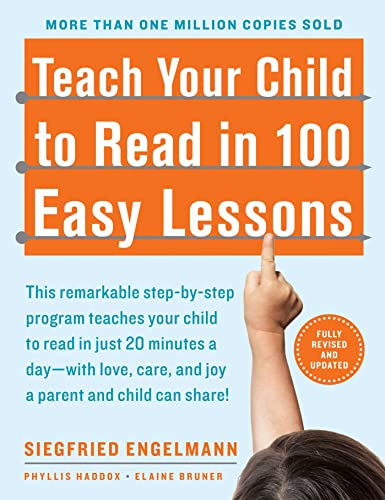
At this stage, we’d recommend purchasing Teach Your Child to Read in 100 Easy Lessons by Siegfried Engelmann, Phyllis Haddox, and Elaine Bruner. It features a direct instruction approach to phonics and takes less than 20 minutes a day. As of this writing, the book has 4.6 stars with almost 17,000 reviews on Amazon!
When going through the book, we’d recommend shooting for 1 lesson per day. However, if your child is struggling with a specific lesson, you could always repeat lessons as needed.
Two things to note about Teach Your Child to Read in 100 Easy Lessons:
- It is essential as a parent that you take the time to read the introductory pages. This will increase your chances of success and completion of the book.
- The lessons can be painful and boring in the beginning, but don’t give up! Once it “clicks” you will be amazed at the progress of your child’s reading ability.
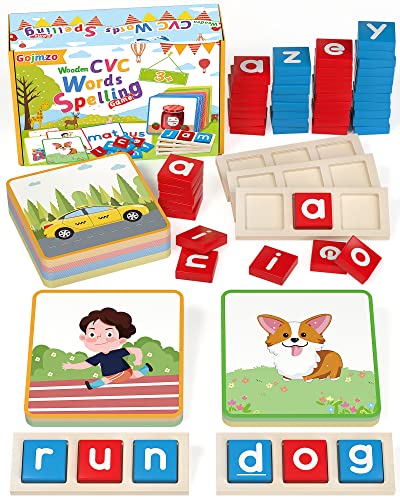
While going through the Teach Your Child to Read in 100 Easy Lessons book, it’s also a good idea to work in some fun word builder games and activities. Here are the best resources to teach your child to read through blending sounds to read words.


This is also a good time to start working in small easy to read books. There are many easy readers out there, but we are big fans of BOB Books. In our own household, when teaching how to read, we ended up buying the entire set. While BOB Books do have books for pre-reading skills, the Stage 1, Set 1, Beginning Readers set is the one we would begin with.
BOB Books – Set 1: Beginning Readers Box Set
There is also an activity book that goes along with the box set that you can find below. If you are homeschooling or would just like additional practice including writing, coloring, puzzles, and games, this is an excellent resource.


Step 5 – Sight Word Recognition
Some common words don’t follow phonetic rules and need to be memorized like the, said, you, come, to, etc. Learning sight words together with phonetic learning will really boost your child’s ability to read quickly and fluently. Sight word recognition is all about practice, repetition, and memorization. This can be done through flash cards, games, songs, or reading books.
Here are the best resources to teach your child to read and master sight word recognition.
Sight Words Pocket Flash Cards Bundle – To use these cards, we’d recommend starting with Level A and picking out 10 or so flash cards, preferably the easiest ones. This will help your child gain confidence when learning the sight words. Some of these sight words can be sounded out, but some cannot, so memorization is key here. Once they have mastered the first 10, have them work on 10 more until the pack is complete.


Step 6 – Reading Practice
At some point during this journey, it will start to click, and your child will begin to actually read. It may be slow at first and that’s ok. Once your child is at the reading phase, it’s important to provide lots of reading practice that includes applying phonics skills in combination with sight words. You’ll want to start with books that use a controlled vocabulary.
Once we completed the BOB book series and moved on to actual books, our favorite readers were definitely from the Elephant and Piggie series. The Elephant and Piggie books are a fantastic starter series for new readers and the “biggie books” are great because they include 5 books in 1, which allows plenty of opportunities to practice.
Elephant and Piggie Biggie! Volume 1 by Mo Willems
While reading, make sure to encourage your child to point to each word as they read and don’t forget to “sound it out.” Don’t be afraid to read the book as a read-aloud first. This can help your child with words that may be difficult. And know that it’s ok to re-read favorite books over and over. This practice will help to build fluency and confidence.
Other early reader books that will help you teach your child to read include:
My First I Can Read series – This series includes classic characters like Biscuit the puppy and Mittens the kitten, as well as newer characters like Mia and Pete the Cat.
Penguin Young Readers, Step into Reading Level 1 series
While your child is developing their love for reading, it is always a good idea to reinforce it with read-aloud time. Whether this is done at bedtime or worked into a daily homeschool curriculum, the benefits of reading aloud each day are tremendous.


We have included a list of picture books that you might find helpful as part of our Kindergarten Homeschool Curriculum and if your child is ready (and has the attention span) for chapter books, we have recommendations for those under our Books section. Happy reading!
The BEST Kindergarten Homeschool Curriculum
Read Aloud and Picture Book Ideas
