

Designed for students from 4th grade through 6th grade, this FREE STEAM-based Intro to Chemistry Unit Study for upper elementary students includes chemistry topics such as states of matter, the periodic table, atoms and molecules, acids and bases, mixtures, chemical reactions, and more.
FREE UNIT STUDIES
Intro to Chemistry Unit Study
April 24, 2025
The following content may contain affiliate links. If you purchase something from the links, we may receive a commission.

Introduction
Welcome to The Family Years – Intro to Chemistry Unit Study! This FREE STEAM-based unit study for upper elementary students explores chemistry topics such as states of matter, the periodic table, atoms and molecules, acids and bases, mixtures, chemical reactions, and more.
Designed for students from 4th grade through 6th grade, children will explore chemistry through engaging texts, videos, and hands-on activities and experiments. The unit study is designed to touch on specific chemistry topics each week at a moderate pace.
Each week includes a daily reading out of the textbooks listed below, a topic-based video, and at least one experiment or activity. At this pace, it will take approximately 12 weeks to complete. As with the other free homeschooling unit studies offered on our site, you are encouraged to go at your own pace, but a 4-day curriculum example is included with each section.
Intro to Chemistry Textbooks
The Upper Elementary Intro to Chemistry Unit Study uses two main textbooks, Chemistry for Curious Kids and Usborne Lift-the-Flap Periodic Table. Along with the textbooks, there is also one biography and one chemistry experiments book. These books can be purchased from the links below (Resource Tab) or check your local library for titles that you may not be interested in purchasing at this time.
This curriculum also comes with an optional free printable worksheet that covers the entirety of the curriculum. You can print out your copy here.
We are excited that you have chosen to learn alongside us and hope you and your family enjoy this Homeschool Upper Elementary Intro to Chemistry Unit Study!
Are you currently doing our Intro to Chemistry Unit Study? BOOKMARK THIS PAGE or SAVE THE PDF for easy access to video and activity links!
Please note, The Family Years homeschooling Intro to Chemistry Unit Study is copyrighted and for personal use only.


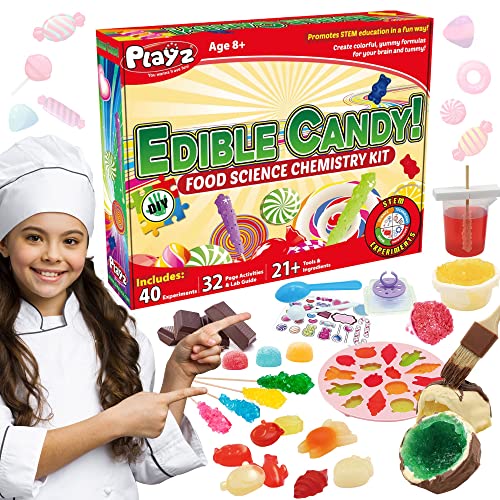
Optional Chemistry Books and Activity Kits
Want to dive in deeper? Check out these additional science books to further enrich your Homeschool Upper Elementary Intro to Chemistry Unit Study!
CHEMISTRY ACTIVITY BOOKS –


FAQ
How long does the unit study take to complete?
Our unit studies are designed to be self-paced, but when covering one section per week, the Homeschool Upper Elementary Intro to Chemistry Unit Study should take about 12 weeks to complete.
What age range is best for the Intro to Chemistry Unit Study?
The Intro to Chemistry Unit Study was created for students in 4th Grade through 6th Grade or kids aged nine through twelve.
Do you have to buy ALL the recommended books?
We would highly recommend purchasing both of the main textbooks and the experiments book since they are used each week. They are also great resources for your home library. To save money, you can check your local library and see what is available to borrow or consider purchasing the books secondhand.
Is the Homeschool Intro to Chemistry Unit Study really free?
The Homeschool Upper Elementary Intro to Chemistry Unit Study is completely free. Most of the books included can be found at your local library and the bulk of the activities can be completed with items you already have around the house.
CHEMISTRY TEXTBOOKS FOR KIDS
1. Chemistry for Curious Kids
2. Usborne Lift-the-Flap Periodic Table
3. Who was Marie Curie? by Megan Stine
CHEMISTRY EXPERIMENT BOOK
1. Awesome Chemistry Experiments for Kids: 40 STEAM Science Projects and Why They Work
I. STATES OF MATTER
- Students will learn about the states of matter.
- Students will learn about melting points and boiling points.
Day 1
Read – Chemistry for Curious Kids –
The Amazing World of Chemistry (p. 4 – 5), States of Matter – Solids (p. 6 – 9)
Watch – What’s Matter?
Activity – Solid State – Stamp Fill In
Day 2
Read – Chemistry for Curious Kids – Liquids (p. 10 – 11), Gases (p. 12 – 13), and Brownian Motion (p. 18 – 19)
Watch – What is Surface Tension?
Activity – Liquid State / Gas State – Stamp Fill In
*Bonus: Egg in Bottle Experiment (#1) or Surface Tension Experiment (#3) – 5 Easy at Home Science Experiments with Mark Rober
Day 3
Read – Chemistry for Curious Kids – Melting Point (p. 14 – 15) and Boiling Point (p. 16 – 17)
Watch – Part(icles) of Your World
Day 4
Activity – Crystal Ball
- The Amazing World of Chemistry (p. 4 – 5)
- States of Matter – Solids (p. 6 – 9)
- States of Matter – Liquids (p. 10 – 11)
- States of Matter – Gases (p. 12 – 13)
- Brownian Motion (p. 18 – 19)
- Melting Point (p. 14 – 15)
- Boiling Point (p. 16 – 17)
- Solid State – Stamp Fill In
- Liquid State / Gas State – Stamp Fill In
5 Easy at Home Science Experiments with Mark Rober (12:14)
Awesome Chemistry Experiments for Kids
- Crystal Ball (p. 16 – 17)
II. ATOMS, MOLECULES, AND MIXTURES
- Students will learn about the differences in atoms and molecules.
- Students will learn about elements, compounds, mixtures, and alloys.
Day 1
Read – Chemistry for Curious Kids – Chemical Building Blocks (p. 26 – 27), Atoms (p. 28 – 29), and Molecules (p. 30 – 31)
Watch – Chemistry with LEGOS
Day 2
Read – Chemistry for Curious Kids – Elements (p. 20 – 21) and Compounds (p. 22 – 23)
Watch – Types of Matter: Elements, Compounds, and Mixtures
Day 3
Read – Chemistry for Curious Kids – Mixtures (p. 24 – 25) and Alloys (p. 124 – 125)
Watch – Chemical Changes
Day 4
Activity – Orange Peel, Pop, Poof!
- Chemical Building Blocks (p. 26 – 27)
- Atoms (p. 28 – 29)
- Molecules (p. 30 – 31)
- Elements (p. 20 – 21)
- Compounds (p. 22 – 23)
- Mixtures (p. 24 – 25)
- Alloys (p. 124 – 125)
Awesome Chemistry Experiments for Kids
- Orange Peel, Pop, Poof! (p. 56 – 57)
III. THE PERIODIC TABLE
- Students will be introduced to the periodic table.
- Students will learn about non-metals, actinides, and lanthanides.
Day 1
Read – Chemistry for Curious Kids – The Periodic Table (p. 66 – 67), Lift-the-Flap Periodic Table – What is the Periodic Table? (p. 1 – 2) and How Does the Periodic Table Work? (p. 3 – 4)
Watch – The Genius of Mendeleev’s Periodic Table
Day 2
Read – Chemistry for Curious Kids – Non-Metals (p. 68 – 69), Lift-the-Flap Periodic Table – The Elements of Life (p. 11 – 12)
Watch – Carbon: The Element of Life
Day 3
Read – Chemistry for Curious Kids – Actinides and Lanthanides (p. 82 – 83), Lift-the-Flap Periodic Table – Danger – Radioactive Elements! (p. 15 – 16)
Watch – Every Radioactive Elements Explained in 12 Minutes
Day 4
Activity – Release the Gas!
- The Periodic Table (p. 66 – 67)
- Non-Metals (p. 68 – 69)
- Actinides and Lanthanides (p. 82 – 83)
- What is the Periodic Table? (p. 1 – 2)
- How Does the Periodic Table Work? (p. 3 – 4)
- The Elements of Life (p. 11 – 12)
- Danger – Radioactive Elements! (p. 15 – 16)
Awesome Chemistry Experiments for Kids
- Release the Gas! (p. 28 – 29)
IV. METALS
- Students will learn about alkali metals and alkaline earth metals.
- Students will learn about Marie Curie.
Day 1
Read – Chemistry for Curious Kids – Alkali Metals (p. 74 – 75) and Alkaline Earth Metals (p. 76 – 77), Lift-the-Flap Periodic Table – Elements that Fizz and Bang (p. 5 – 6)
Watch – Trends in the Periodic Table – Reactivity!
Day 2
Read – Who was Marie Curie? – Who was Marie Curie? (p. 1 – 4) and Chapter 1 – Eager to Learn (p. 5 – 19)
Day 3
Read – Who was Marie Curie? – Chapter 2 – The Secret School (p. 20 – 28) and Chapter 3 – Hungry but Happy (p. 29 – 36)
Day 4
Activity – Sherbet
- Alkali Metals (p. 74 – 75)
- Alkaline Earth Metals (p. 76 – 77)
- Elements that Fizz and Bang (p. 5 – 6)
Who Was Marie Curie? by Megan Stine
- Who was Marie Curie? (p. 1 – 4)
- Chapter 1 – Eager to Learn (p. 5 – 19)
- Chapter 2 – The Secret School (p. 20 – 28)
- Chapter 3 – Hungry but Happy (p. 29 – 36)
Awesome Chemistry Experiments for Kids
- Sherbet (p. 88 – 89)
V. MARIE CURIE
- Students will learn about Marie and Pierre Curie.
- Students will learn about polonium, radium, and radioactivity.
Day 1
Read – Who was Marie Curie? – Chapter 4 – Two Loves (p. 37 – 44) and Chapter 5 – Marie’s Discovery (p. 45 – 59)
Watch – How Madam Curie and Pierre Curie Discovered Radioactivity
Day 2
Read – Who was Marie Curie? – Chapter 6 – It Glows! (p. 60 – 68) and Chapter 7 – Fame and Fortune (p. 69 – 75)
Day 3
Read – Who was Marie Curie? – Chapter 8 – Misery (p. 76 – 90) and Chapter 9 – A Family of Scientists (p. 91 – 103)
Watch – The Genius of Marie Curie
Day 4
Activity – Poly Squishy!
Who Was Marie Curie? by Megan Stine
- Chapter 4 – Two Loves (p. 37 – 44)
- Chapter 5 – Marie’s Discovery (p. 45 – 59)
- Chapter 6 – It Glows! (p. 60 – 68)
- Chapter 7 – Fame and Fortune (p. 69 – 75)
- Chapter 8 – Misery (p. 76 – 90)
- Chapter 9 – A Family of Scientists (p. 91 – 103)
Awesome Chemistry Experiments for Kids
- Poly Squishy! (p. 86 – 87)
VI. MORE METALS, HALOGENS, AND GASES
- Students will learn about metals, transition metals, metalloids, and post-transition metals.
- Students will learn about halogens and noble gases.
Day 1
Read – Chemistry for Curious Kids – Metals (p. 122 – 123), Transition Metals (p. 78 – 79), Lift-the-Flap Periodic Table – Hard, Shiny Metals (p. 7 – 8)
Watch – How is Gold Made?
Day 2
Read – Chemistry for Curious Kids – Metalloids (p. 80 – 81) and Post-Transition Metals (p. 84 – 85), Lift-the-Flap Periodic Table – Soft, Dull Metals (p. 9 – 10)
Watch – Silicon: The Cleverest Element on Earth
Day 3
Read – Chemistry for Curious Kids – Halogens (p. 70 – 71) and Noble Gases (p. 72 – 73), Lift-the-Flap Periodic Table – Solids, Liquids, and Gases (p. 13) and Hidden Elements (p. 14)
Watch – Inspiring Minds: Sir William Ramsay
Day 4
Activity – Bath Bombs
- Metals (p. 122 – 123)
- Transition Metals (p. 78 – 79)
- Metalloids (p. 80 – 81)
- Post-Transition Metals (p. 84 – 85)
- Halogens (p. 70 – 71)
- Noble Gases (p. 72 – 73)
- Hard, Shiny Metals (p. 7 – 8)
- Soft, Dull Metals (p. 9 – 10)
- Solids, Liquids, and Gases (p. 13)
- Hidden Elements (p. 14)
Awesome Chemistry Experiments for Kids
- Bath Bombs (p. 80 – 81)
VII. CHEMISTRY OF LIFE
- Students will learn about the properties of water.
- Students will learn about the carbon cycle.
Day 1
Read – Chemistry for Curious Kids – The Chemistry of Life (p. 47), Water (p. 48 – 49), and Oxygen (p. 50 – 51)
Watch – Properties of Water
Day 2
Read – Chemistry for Curious Kids – Carbon Dioxide (p. 52 – 53) and Carbon (p. 54 – 55)
Watch – The Carbon Cycle
Day 3
Read – Chemistry for Curious Kids – Nitrogen (p. 56 – 57) and Ozone (p. 58 – 59)
Watch – What Happened to the Hole in the Ozone Layer?
Day 4
Activity – DIY Water Filter
- The Chemistry of Life (p. 47)
- Water (p. 48 – 49)
- Oxygen (p. 50 – 51)
- Carbon Dioxide (p. 52 – 53)
- Carbon (p. 54 – 55)
- Nitrogen (p. 56 – 57)
- Ozone (p. 58 – 59)
DIY Water Filter –
VIII. POLYMERS AND ISOTOPES
- Students will learn about greenhouse gases.
- Students will learn about polymers and proteins.
- Students will learn about isotopes and nanoparticles.
Day 1
Read – Chemistry for Curious Kids – Greenhouse Gases (p. 60 – 61) and Chlorophyll (p. 62 – 63)
Watch – Which Greenhouse Gas is Actually the Worst?
Day 2
Read – Chemistry for Curious Kids – Polymers (p. 32 – 33) and Protein (p. 64 – 65)
Watch – Introduction to Polymer Processing
Day 3
Read – Chemistry for Curious Kids – Isotopes (p. 34 – 35) and Nanoparticles (p. 36 – 37)
Watch – What is Nanotechnology?
Day 4
Activity – Moo Glue
- Greenhouse Gases (p. 60 – 61)
- Chlorophyll (p. 62 – 63)
- Polymers (p. 32 – 33)
- Protein (p. 64 – 65)
- Isotopes (p. 34 – 35)
- Nanoparticles (p. 36 – 37)
Awesome Chemistry Experiments for Kids
- Moo Glue (p. 78 – 79)
IX. pH, ACIDS, AND BASES
- Students will learn about pH levels.
- Students will learn about acids and bases.
- Students will learn about tools used in a chemistry lab.
Day 1
Read – Chemistry for Curious Kids – pH (p. 38 – 39) and Acids (p. 40 – 41)
Watch – pH Scale in Simple Terms
Day 2
Read – Chemistry for Curious Kids – Bases and Alkalis (p. 42 – 43) and Universal Indicators (p. 44 – 45)
Watch – Acids and Bases for Kids
Day 3
Read – Chemistry for Curious Kids – In the Lab (p. 87), Bunsen Burner (p. 88 – 89), and Thermometer (p. 90 – 91)
Watch – A Day in the Work Life of a Chemist
Day 4
Activity – Antacid Rainbow
- pH (p. 38 – 39)
- Acids (p. 40 – 41)
- Bases and Alkalis (p. 42 – 43)
- Universal Indicators (p. 44 – 45)
- In the Lab (p. 87)
- Bunsen Burner (p. 88 – 89)
- Thermometer (p. 90 – 91)
Awesome Chemistry Experiments for Kids
- Antacid Rainbow (p. 52 – 53)
X. CHEMICAL REACTIONS
- Students will learn about filters and distillation.
- Students will learn about chemical reactions.
- Students will learn about combustion and fireworks.
Day 1
Read – Chemistry for Curious Kids – Test Tubes, Flasks, Beakers, and Pipettes (p. 92 – 93), Filters and Filtration (p. 94 – 95), and Distillation (p. 96 – 97)
Watch – Can a Solar Still Generate Enough Fresh Water for Survival?
Day 2
Read – Chemistry for Curious Kids – Chromatography (p. 98 – 99) and Chemical Reactions (p. 100 – 101)
Watch – Color Chromatography for Kids
Day 3
Read – Chemistry for Curious Kids – Combustion (p. 102 – 103) and Fireworks (p. 104 – 105)
Watch – Firework Chemistry and More Experiments with Science Bob
Day 4
Activity – Grass Chromatography
- Test Tubes, Flasks, Beakers, and Pipettes (p. 92 – 93)
- Filters and Filtration (p. 94 – 95)
- Distillation (p. 96 – 97)
- Chromatography (p. 98 – 99)
- Chemical Reactions (p. 100 – 101)
- Combustion (p. 102 – 103)
- Fireworks (p. 104 – 105)
Awesome Chemistry Experiments for Kids
- Grass Chromatography (p. 45 – 47)
XI. CHEMICALS ALL AROUND US
- Students will learn about air and seawater.
- Students will learn about rocks and minerals.
Day 1
Read – Chemistry for Curious Kids – Chemicals All Around (p. 107) and Air (p. 108 – 109)
Watch – What’s in the Air You Breathe?
Day 2
Read – Chemistry for Curious Kids – Seawater (p. 110 – 111)
Watch – How One of the Rarest Salts in the World Goes from Ocean to Table
Activity – Floating Egg Science Experiment
Day 3
Read – Chemistry for Curious Kids – Rock (p. 112 – 113) and Minerals (p. 114 – 115)
Watch – A Day in the Work Life of a Chemist
Day 4
Activity – Brown Apples
- Chemicals All Around Us (p. 107)
- Air (p. 108 – 109)
- Seawater (p. 110 – 111)
- Rock (p. 112 – 113)
- Minerals (p. 114 – 115)
Floating Egg Science Experiment (1:46)
Awesome Chemistry Experiments for Kids
- Brown Apples (p. 74 – 75)
XII. FOSSIL FUELS
- Students will learn about fossil fuels including oil, coal, and natural gas.
Day 1
Read – Chemistry for Curious Kids – Fossil Fuels: Oil (p. 116 – 117)
Watch – How Did So Much Oil Get Trapped Under the Ocean?
Day 2
Read – Chemistry for Curious Kids – Fossil Fuels: Coal
Watch – Coal Conversion and Electricity Production
Day 3
Read – Chemistry for Curious Kids – Fossil Fuels: Natural Gas
Watch – How Does Fracking Work?
Day 4
Activity – Elephant Toothpaste
- Fossil Fuels: Oil (p. 116 – 117)
- Fossil Fuels: Coal (p. 118 – 119)
- Fossil Fuels: Natural Gas (p. 120 – 121)
5 Easy at Home Science Experiments with Mark Rober (12:14) – Elephant Toothpaste #5
IF YOU ENJOYED THIS FREE INTRO TO CHEMISTRY HOMESCHOOL UNIT STUDY, YOU MAY ALSO LIKE –
● FREE Intro to Space Unit Study
● FREE Around the World Unit Study
● FREE Across the USA – 50 States Unit Study
● FREE Intro to Weather Unit Study
● FREE Intro to Geology Unit Study
● FREE Alabama History Homeschool Curriculum
● Homeschooling 101 – How to Start Homeschooling
● The BEST 4th Grade Homeschool Curriculum
